
MEDICINE
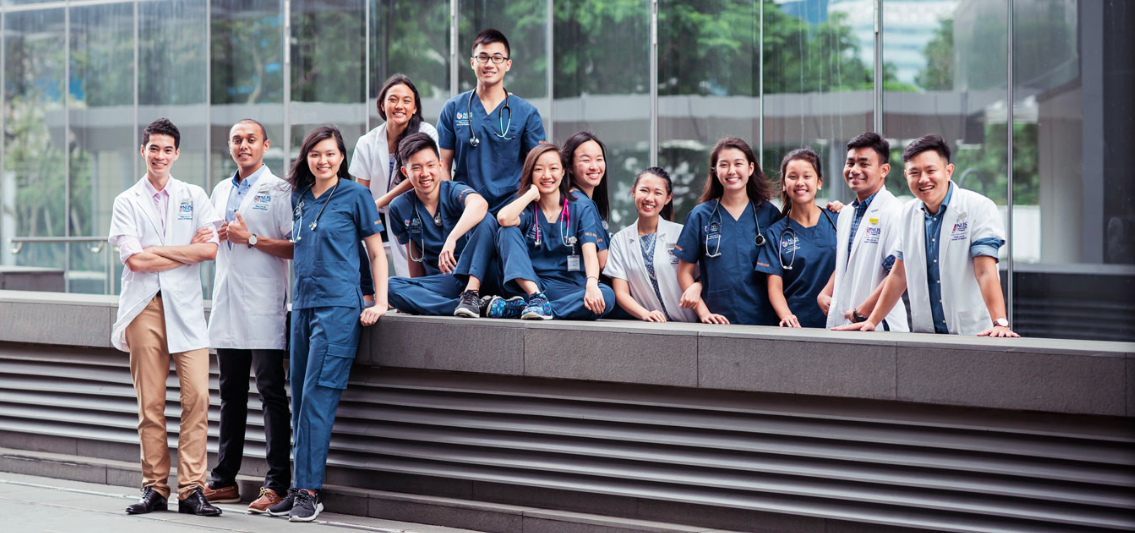
NUS medicine trains aspiring medical doctors to the highest clinical standards and prepares students to competently, compassionately, and creatively tackle medical challenges. Year 1 and 2 medical students will learn about the anatomy and physiology of the human body at school through lectures and labs. Then, they will transition to learning alongside practising doctors in hospitals.

NURSING
NUS nursing seeks to develop clinically competent, empathetic, and caring nursing professionals through both formal and informal education that extends beyond the classroom environment. Students will learn on how to provide care in fulfilling the physical, psychological, and sociological needs of a patient through stimulations during on-campus clinicals.

PHARMACY
NUS pharmacy uses an integrative and multidisciplinary approach to acquire pharmaceutical students with knowledge that spans the whole value chain of drug discovery, drug formulation, as well as regulation and practice of Pharmacy. This way, students will be able to deliver the best medication care plan for their patients.

DENTISTRY
Nus Dentistry establishes to provide broad exposure and extensive experience to dental students of the various aspects of dentistry. Dental students will learn about the fundamental life sciences in their preclinical years through hands-on simulation and laboratory-based training. In their clinical years, they will handle oral health needs of patients across all ages and provide a comprehensive scope of dental treatments, under close staff supervision.

MEDICAL SOCIAL WORK
A Medical Social Worker at the National University Health System (NUHS) provides support to patients and their families by addressing the psychological, emotional, social, economic and physical impact that their medical condition(s) have on their lives. They address emotional, social, and practical challenges related to illness and hospitalization, offering counseling, crisis intervention, and resource coordination. They are also involved in Advanced Care Planning (ACP), which is the process of delegating decision making for future care treatments when one is no longer able to do so due to illness.
CLINICAL PSYCHOLOGY
Clinical psychologists are professionals with specialized training and knowledge in the assessment, diagnosis, biopsychosocial formulation and psychological treatment of a range of psychological difficulties and mental health conditions. They practice in diverse settings such as hospitals, general medical practices, community health centers, voluntary welfare organizations, private practices, and universities. They work with individuals across the lifespan, including children, adolescents, adults, and older adults. Additionally, clinical psychologists design and implement prevention and mental health promotion programs, conduct clinical research, provide consultation, and take on leadership roles. Their expertise significantly contributes to improving the health and quality of life of many individuals affected by mental health issues.

PHYSIOTHERAPY
SIT Physiotherapy aims to produce professional physiotherapists who are theoretically grounded and clinically-orientated to practise autonomously in different specialisations. It involves the assessment, treatment, rehabilitation and prevention of pain, injury, or any other physical dysfunction, through the use of education, exercise, manual therapy, electrophysical agents, technology or any other treatment for those purposes.
OCCUPATIONAL THERAPY
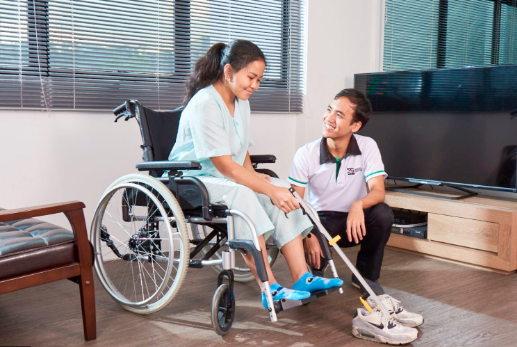
SIT Occupational therapy is designed to provide excellent educational experience in theory and practice of occupational therapy. It comprises of evaluations and interventions that address various aspects of an individual’s life, such as work or school, self-care, leisure or play, physical surroundings, and cognitive, mental, and physical components of functioning. This empowers people who have experienced physical injury or illness, developmental or learning disabilities, psychosocial dysfunctions, or aging-related challenges, to engage in daily life activities independently, maintain their health, prevent disability, and fulfill their roles in society.

DIAGNOSTIC RADIOGRAPHY
SIT Diagnostic Radiography develops in close consultation with the radiography industry to ensure relevance and graduates’ employability. Diagnostic radiography students will learn the use of sophisticated equipments and techniques to produce medical images of the human body, which can be used to diagnose/ treat illness/injury. Professional training is done to deliver sensitive and patient-centered healthcare service.

RADIATION THERAPY
SIT Radiation Therapy program offers a comprehensive education in the field of radiation oncology, preparing students for rewarding careers as radiation therapists. Through a combination of theoretical coursework and hands-on clinical training, students learn about the use of radiation to treat cancer patients. With access to state-of-the-art facilities and guidance from experienced professionals, students emerge equipped to deliver high-quality, compassionate care to individuals undergoing radiation therapy, contributing to advancements in cancer treatment and patient outcomes.
SPEECH AND LANGUAGE THERAPY
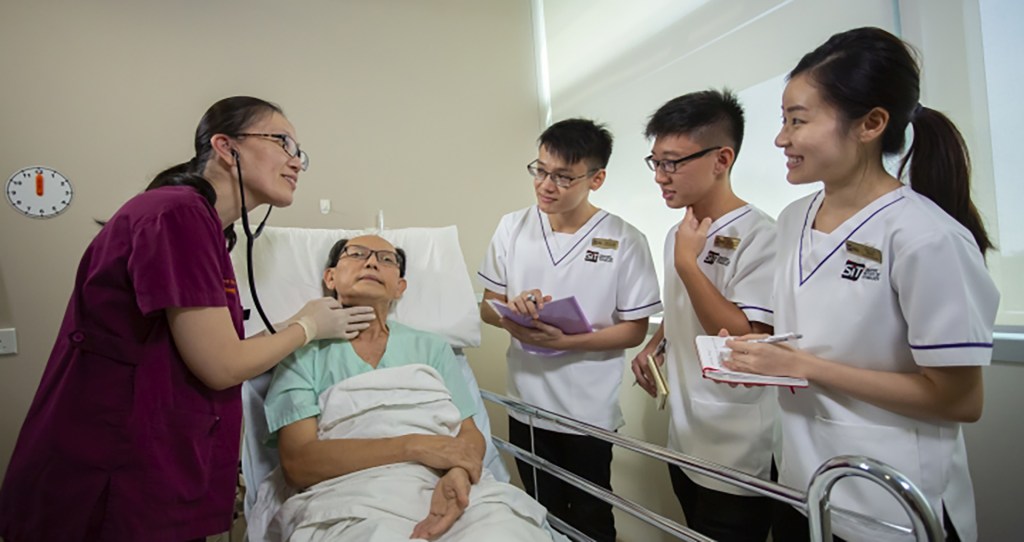
SIT’s Speech and Language Therapy program provides students with the expertise to address communication and swallowing disorders across diverse populations. Through a blend of theoretical learning and practical clinical experiences, students delve into areas such as communication development, communication disorders, voice science and dysphagia management. Speech and Language Therapy students are equipped to make a meaningful difference in the lives of individuals with communication challenges, fostering improved speech, language, and swallowing abilities for enhanced quality of life.
DIETETICS AND NUTRITION
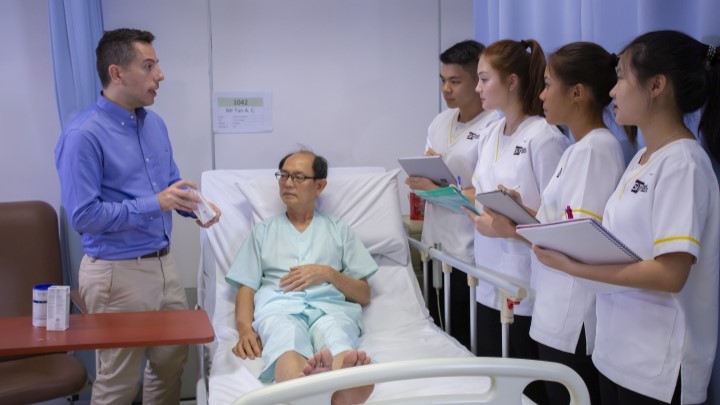
SIT Dietetics and Nutrition program seeks to provide you with evidence-based theoretical knowledge, research skills, and practical experience across all domains of dietetic practice (individual clinical case management, community and public health nutrition, and food service management). Covering fundamental topics in nutrition science, medical nutrition therapy, nutritional counselling, and public health nutrition, the program prepares students for diverse career paths as registered dietitians or food developers. With a focus on practical application and hands-on experience through internships or practicums, students will be equipped to make a positive impact in healthcare, community settings, and the food industry.
 Healthcare Outreach Project